Previous Story
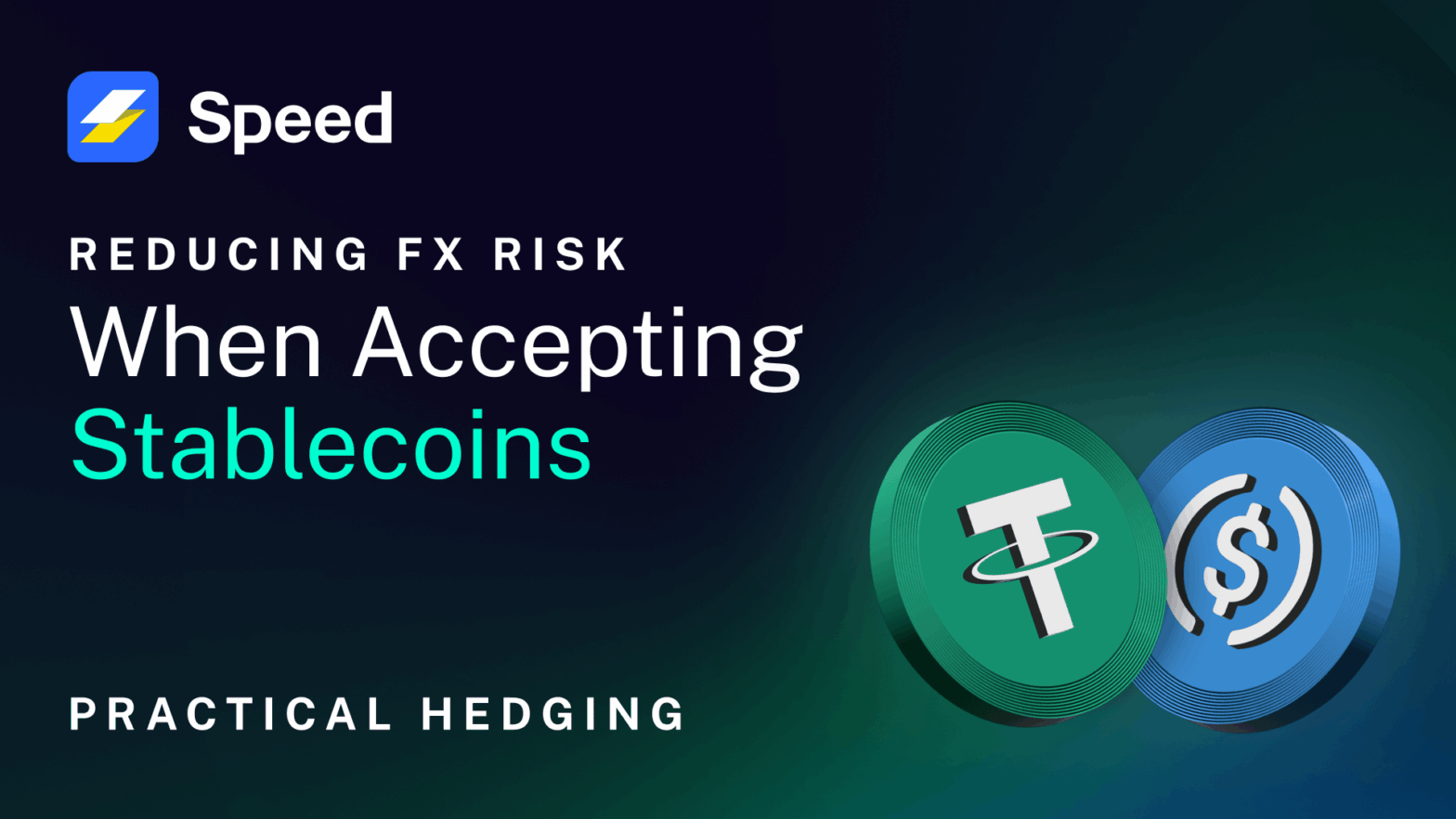


Stablecoins have become a preferred payment method for global businesses because they’re fast, digital, and pinned to a predictable value. But while they protect you from crypto volatility, they don’t protect you from foreign exchange (FX) volatility.
If your expenses are in your home currency — and you collect payments in a USD-pegged stablecoin — your business is still exposed to currency swings. And in markets where FX rates move quickly, even a slight delay in converting funds can shrink your margins.
The good news: you don’t need to be a financial expert or run a large treasury team to manage this. With a few practical hedging habits, you can reduce FX risk and keep revenue predictable.
Most stablecoins today are pegged to the US dollar. That peg protects you from crypto-market swings — but it doesn’t freeze the USD’s value relative to your own currency.
For example, if you operate in India, Brazil, Turkey, Nigeria, or any high-volatility market, the USD exchange rate may move daily. Between the time you receive a payment in USDT/USDC and the time you convert it, the local currency value might change for better or worse.
This risk increases when:
Stablecoins make payments faster — but FX volatility still affects your bottom line.
These strategies are simple, practical, and commonly used by merchants, freelancers, exporters, and global SaaS businesses that accept stablecoins.
If your goal is predictable income, the safest hedge is not to wait.
Converting your stablecoin payments immediately into your home currency:
Many merchants who accept stablecoins follow a “receive → convert → settle” flow.
It’s low-effort, cost-efficient, and surprisingly effective.
If you regularly receive stablecoin payments — but plan to convert on a future date — a forward contract can remove uncertainty.
A forward contract lets you lock in today’s exchange rate for a future conversion.
This gives your business clarity on:
Forward contracts are widely used by exporters and cross-border SaaS companies because they reduce currency shocks.
If you intend to hold stablecoins longer (for treasury, reserves, or operational flexibility), diversification helps reduce concentration risk.
That includes:
Diversification doesn’t remove FX risk, but it smooths the impact of sudden events.
Many growing businesses use a blended model:
This hybrid approach lets you benefit from the efficiency of stablecoins without carrying full FX exposure. It’s beneficial for merchants who pay vendors or affiliates in crypto.
If you occasionally hold stablecoins to take advantage of better conversion windows, stay informed about:
Merchants in emerging markets often see monthly patterns: the USD strengthens near quarter-end, weakens after remittance cycles, or moves based on government policy announcements.
A little awareness can help you convert at more favorable times.
A design agency in Mumbai receives a $2,000 monthly payment in USDT.
Scenario 1: They convert immediately.
Scenario 2: They wait 30 days before converting.
Scenario 3: They hedge their next three months using a forward contract.
In real life, most small businesses choose a mix of immediate conversion + occasional forwards to stay safe.
Stablecoins are rapidly becoming a mainstream payment rail for merchants because they offer:
But increased adoption means increased exposure. As more revenue flows in as USDT, USDC, and other stable assets, a business must treat FX management as part of its normal financial operations.
Hedging isn’t about predicting the market — it’s about protecting what you’ve already earned.
Stablecoins solve crypto volatility, minimize friction, and make global payments dramatically easier. But as long as your costs and operations run in your local currency, FX risk remains.
Practical hedging closes that gap.
Whether you’re a merchant, freelancer, SaaS platform, marketplace, or global service provider, the right mix of:
Can protect your income and safeguard your margins.
Stablecoins make your business faster.
Hedging makes it safer.



Crypto payments are quickly moving from optional to expected. Here’s what’s driving merchant adoption worldwide — from stablecoin growth to SMB uptake — and why businesses can’t afford to ignore the shift.

Explore what’s driving crypto merchant adoption in 2026 and how to overcome integration barriers. Start accepting crypto seamlessly with Speed today.

Crypto is becoming core financial infrastructure for enterprises. Discover the trends shaping payments, treasury, and B2B adoption. Read the full analysis.

Your competitors cut fees by 90% with crypto payments. Learn why stablecoins, fast settlements, and global reach matter in 2026. Get started now.

Speed is a leading Bitcoin payment processor for individuals & businesses. Accept Bitcoin payments in your online or offline store, instantly over the Lightning Network or on-chain, at no setup cost.

© 2026 by Speed1 INC.
Speed Merchant (tryspeed.com) is operated by Speed1 INC and utilizes crypto services covered by the Money Services Business (MSB) license held by CoinX USA LLC (MSB License: 31000292053099), under an exclusive internal licensing agreement.